Rosa Bauer · 29 September 2026
The Interplay Between Climate Patterns and Information Durability in Advanced Systems
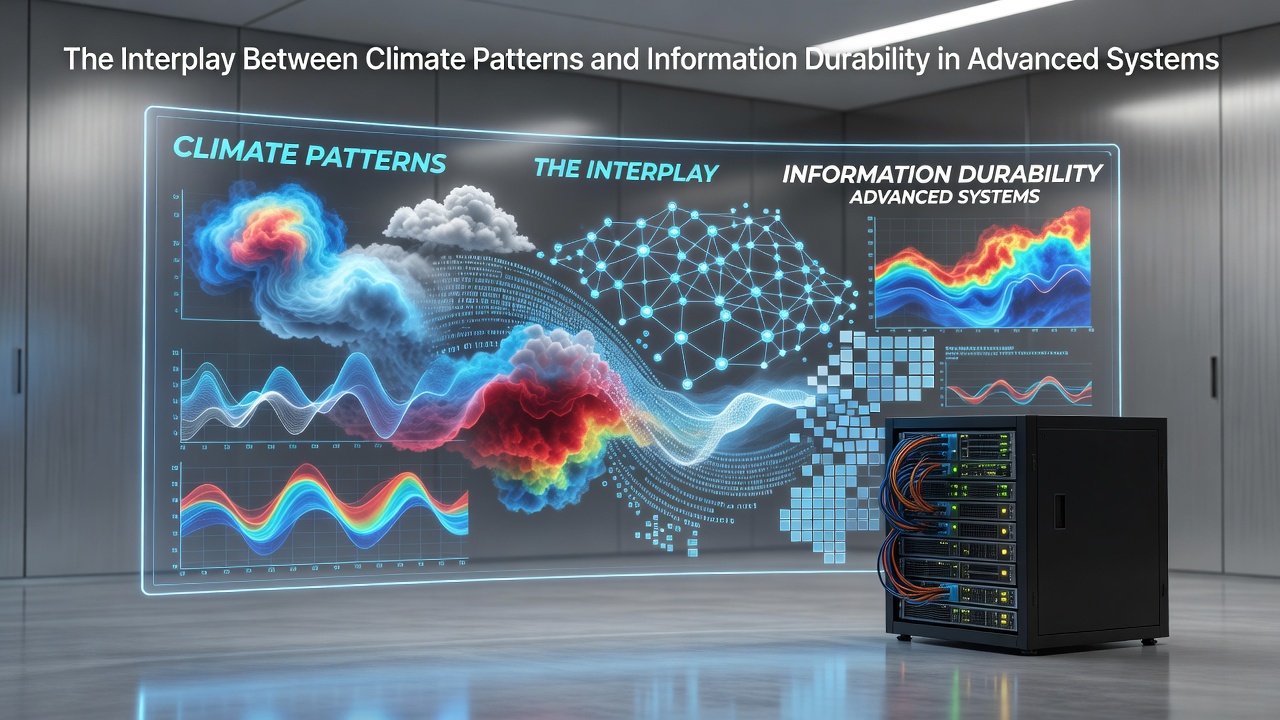
Climate patterns shape the conditions under which advanced information systems operate, and data from multiple monitoring networks shows measurable effects on hardware longevity and data integrity over time. Temperature swings, humidity shifts, and extreme weather events alter the performance of storage media, processors, and network components in ways that accumulate across years of operation.
Regional Climate Trends and Infrastructure Exposure
Records compiled by the National Oceanic and Atmospheric Administration document rising average temperatures alongside more frequent heat waves across North American data center corridors, while the European Environment Agency tracks parallel increases in both dry spells and intense precipitation events affecting facilities across the continent. These patterns place different stresses on cooling systems, building envelopes, and backup power arrangements that protect digital archives.
Facilities located in coastal zones face additional pressure from storm surge and saltwater exposure during intensified weather cycles, whereas inland installations contend with wider diurnal temperature ranges that accelerate thermal cycling in solid-state drives and magnetic tape libraries. Researchers tracking error rates in large-scale storage arrays note correlations between sustained high humidity periods and increased incidence of bit rot in certain media types.
Physical Mechanisms Linking Environment to Data Integrity
Heat accelerates electromigration within semiconductor structures, shortening the operational lifespan of NAND flash cells and DRAM modules when cooling capacity lags behind ambient conditions. Elevated moisture levels promote corrosion on connector pins and printed circuit boards, creating intermittent faults that can corrupt data during read-write cycles. Dust and particulate matter carried by stronger wind events further reduce airflow efficiency inside server racks, compounding thermal stress.
Studies of archival tape collections maintained in climate-controlled vaults reveal that even small deviations from recommended temperature and humidity bands increase the frequency of tape delamination and magnetic particle shedding. Optical media shows similar sensitivity, with layer separation rates rising measurably after repeated exposure to condensation cycles. Advanced systems incorporating error-correcting codes and redundant arrays mitigate some of these effects, yet the underlying physical degradation continues unless environmental controls remain stable.
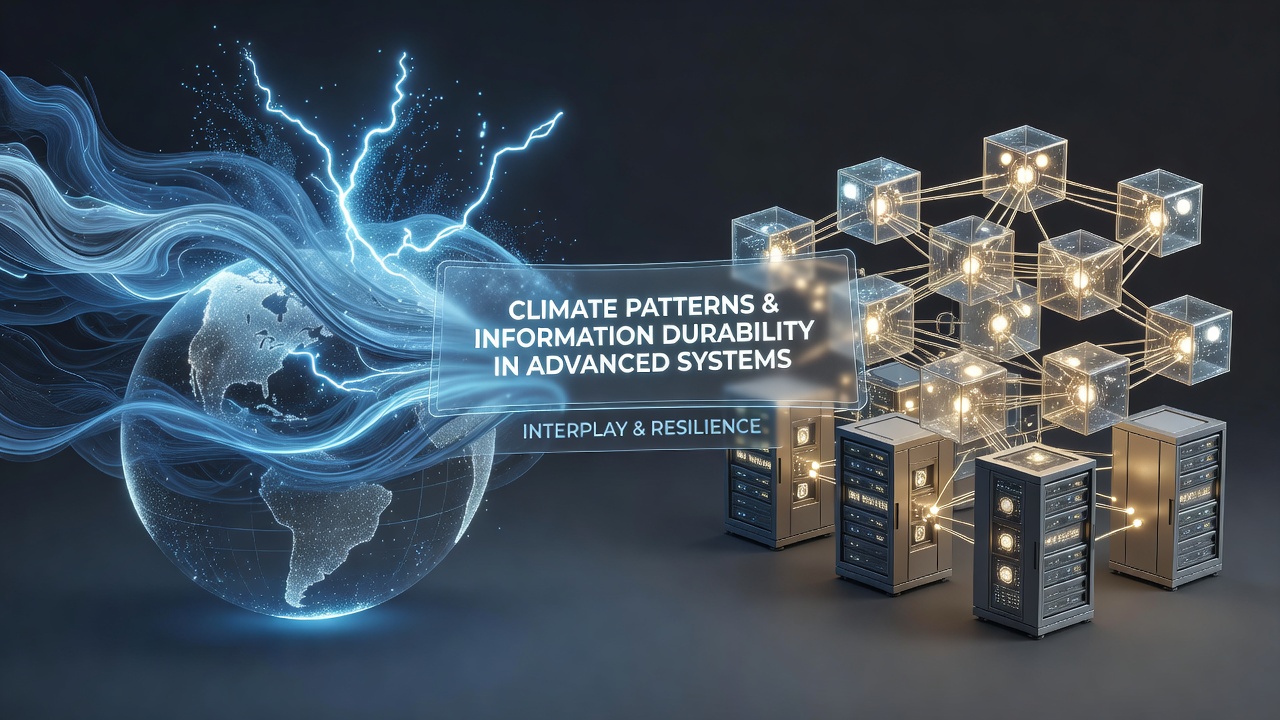
Power fluctuations tied to grid strain during extreme weather also interrupt the continuous operation of environmental controls, allowing brief spikes in temperature or humidity that accumulate over multiple incidents. In September 2026, several large-scale facilities reported measurable increases in uncorrectable read errors following prolonged regional heat events that coincided with elevated grid demand.
Adaptation Strategies in System Design
Engineers respond to these pressures by integrating more robust environmental monitoring directly into hardware platforms, enabling predictive maintenance that accounts for localized climate data. Liquid cooling architectures and phase-change materials appear more frequently in newer installations, reducing reliance on air conditioning during temperature extremes. Geographic distribution of data replicas across climatically diverse regions further limits the risk that any single weather pattern compromises an entire dataset.
Material science advances have produced storage media with greater tolerance for humidity variation, while firmware updates now incorporate adaptive error-correction thresholds that adjust based on real-time sensor readings. These measures extend functional life without eliminating the fundamental relationship between external conditions and component wear.
Monitoring and Predictive Modeling
Long-term observational programs combine satellite-derived climate indicators with on-site sensor networks to forecast periods when durability risks rise. Models developed by research teams at institutions across multiple continents incorporate variables such as cumulative thermal load, moisture exposure duration, and particulate concentration to estimate remaining media lifespan. Validation against historical failure logs improves the accuracy of these projections, allowing operators to schedule migrations or refreshes before data loss thresholds are reached.
Cross-referencing climate projections with infrastructure inventories helps planners identify facilities likely to require upgraded environmental controls within defined timeframes. Such integration of meteorological and engineering datasets supports more precise allocation of maintenance resources across distributed systems.
Conclusion
The relationship between shifting climate patterns and the durability of information in advanced systems rests on measurable physical processes documented through ongoing monitoring and research. Continued collection of environmental and operational data enables refinement of both hardware designs and operational practices that preserve data integrity under evolving conditions.